 |
 |
 |
 |
|
||
 |
 |
|||||
| Museum store | ||||||
 |
||||||
| Info de CDI en Espanol | ||||||
| Grupo Tojolabal info desde el CDI | ||||||
| Info of indigenous language | ||||||
| Sil Maya Language in English | ||||||
| Sil Maya Language in español | ||||||
| Enciclopedia del Municipios | ||||||
| Municipios de Comitan | ||||||
| Municipio de Independencia | ||||||
| Municipio de Las Margaritas | ||||||
| Municipio de Altimirano | ||||||
|
||||||

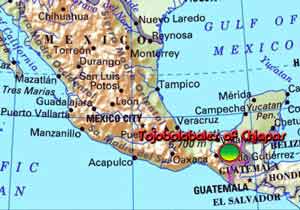
The Tojolabals speak a Chuj language that belongs to the Kanjobal-Chujean family of Maya languages. Tojolabal is closely related to the speech of San Mateo Ixtatán, a Chuj community located in the high Cuchumatanes Mountains of NW Guatemala. Oral traditions of the Tojolabals claim that their ancestors once lived in that area but left or were expelled after deadly fights with their neighbors over local salt works. No one knows for sure when the ancestral Tojolabals arrived in the Comitán region, though Walter Morris puts the date in the 17th Century. The Tojolabals were called Chañabales during the Colonial period, and most worked as sharecroppers on the large haciendas of the Comitán Valley. In 1980, 50 Tojolabal peasants were killed by the army after occupying a hacienda near Comitán. Since 1994, many Tojolabal people have became Zapatistas and some joined the EZLN in the remote jungles east of Ocosingo and Altamirano.
Today, most Tojolabal people make their living by growing corn, beans, and squashes on communally held land. Families usually have a "sitio," or small garden/orchard, near their homes where they grow a variety of other food and medicinal plants and raise small animals like chickens, turkeys, and pigs. Tojolabal villages are located in 3 geographically distinct regions in SE Chiapas: cool highland forests; rugged intermountain valleys and canyons with warmer temperatures; and hot and rainy lowland jungles. Rainfall and temperature determine what other types of crops, including coffee, sugar cane, citrus, and bananas, can be cultivated. Many boys and men leave their villages to work in Mexico City or on the rapidly urbanizing Caribbean coast of Quintana Roo State. Crafts like baskets, ceramics, and textiles are made for household use or for limited sale in local market towns.
Most Tojolabal people are Catholics; many combine Christian doctrine and ritual with indigenous Maya beliefs. Tojolabals once made 4 annual pilgrimages to far-flung churches (including Oxchuc, V. Carranza, and S. Mateo Ixtatán) to petition for rain and abundant harvests. Today, a similar pilgrimage is made each April to the Church of Padre Eterno in La Trinitaria. In Las Margaritas, several hundred families have converted to Protestant faiths and have been expelled from their villages to Comitán; some have been victims of violence.
The traditional male costume of shirt and short pants made of white manta - sometimes decorated with embroidery - and black poncho is almost extinct. Many women in Las Margaritas Municipio wear the "traditional" costume of gathered skirt and short-sleeved blouse. The solid-colored skirts (called "tojol juna") are lavishly decorated with ribbons and lace. The white blouses have a wide ruffle around the neckline, and ruffle and sleeves are embellished with colorful needlework. In the Altamirano region, local women wear gathered skirts and blouses of single bright colors that are decorated with lace and satin ribbons. The short-sleeved blouses have a wide ruffle around the neckline, often edged in colored lace, and aprons are also worn as part of the costume.
Narrative written for Mexican textiles project by Karen Ewell
Thanks Karen
Bob Freund
March 2006
|
Home - The Collection - Favorite Photos- Bob's Top 10 - Textile Patterns - The Villages - Participate
For more information or comments please contact me at: info@mexicantextiles.com © 2005 Bob Freund All Rights Reserved |